
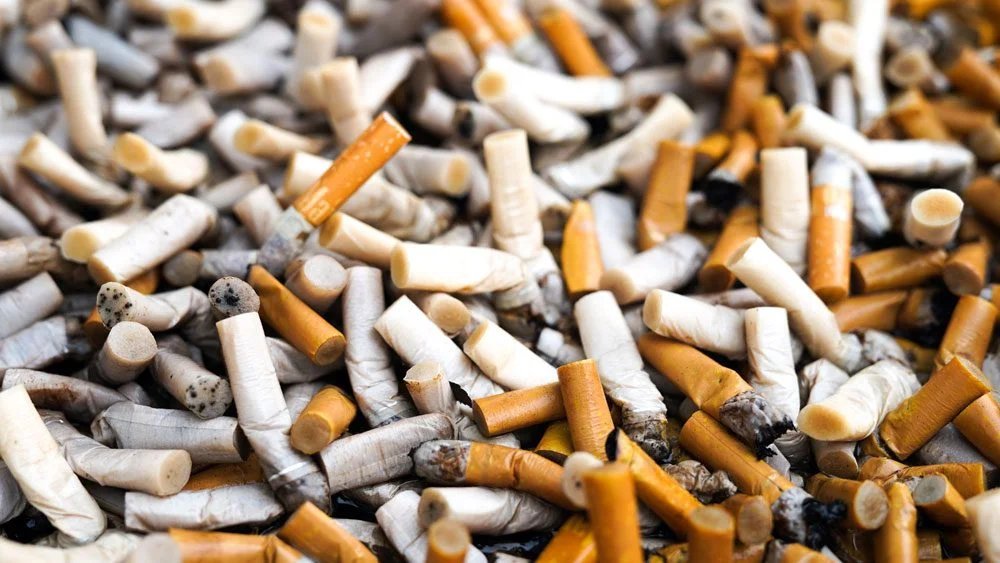


Cigarette butts are one of the most common types of litter, and they are very persistent. Now they have found a use.
From cigarette filters, chemists were able to obtainnanoporous biochar doped with nitrogen and oxygen. It serves as an excellent material for making electrodes forsupercapacitors that can be used to store renewable energyor replace batteries in many gadgets.
“Our work shows that cigarette butts are not only a pollution problem, but also a valuable carbon resource. By converting them into functional porous carbon materials, we can address waste management challenges while supporting the development of clean energy technologies,” explains Professor Cao Leichang from Henan University.
A two-step method for producing biochar from recycled materials is described in the journal Energy & Environment Nexus. It combines hydrothermal carbonation with chemical activation and controlled heat treatment.
During this process, nitrogen and oxygen atoms are inserted into the carbon matrix, forming a hierarchical network of microscopic pores. A structure is learned that is efficient for energy storage because it provides multiple sites for charge storage and fast pathways for ion transport.
Фото: Energy & Environment Nexus
The optimized material, produced at an activation temperature of 700°C, has an exceptionally high specific surface area of over 2,100 square meters per gram. When tested as an electrode in aqueous supercapacitors, butt carbon showed a specific capacitance of about 345 farads per gram. Even after 10,000 charge-discharge cycles at high current density, it retained than 95% of its original capacity.
“The results are impressive, especiallyfor carbon material derived entirely from waste. The combination of developed porosity with functional groups containing nitrogen and oxygen gives the electrode excellent conductivity, stability and energy storage ability,” said co-author Zhang Jinglai from Fudan University.
A full-fledged symmetrical supercapacitor with such electrodes provided an energy density of over 24 watt-hours per kilogram with a high power density.
The environmental benefits of scaling up the technology have yet to be assessed, but it is already clear that it is at least threefold: recycling cigarette butts, reducing the carbon footprint of making supercapacitors from traditional materials, and producing devices for storing clean energy.
Disclaimer: This news article has been republished exactly as it appeared on its original source, without any modification.
We do not take any responsibility for its content, which remains solely the responsibility of the original publisher.
Author:
Published on:2026-01-18 14:05:00
Source: naukatv.ru
Disclaimer: This news article has been republished exactly as it appeared on its original source, without any modification. We do not take any responsibility for its content, which remains solely the responsibility of the original publisher.
Author: uaetodaynews
Published on: 2026-01-18 22:10:00
Source: uaetodaynews.com