
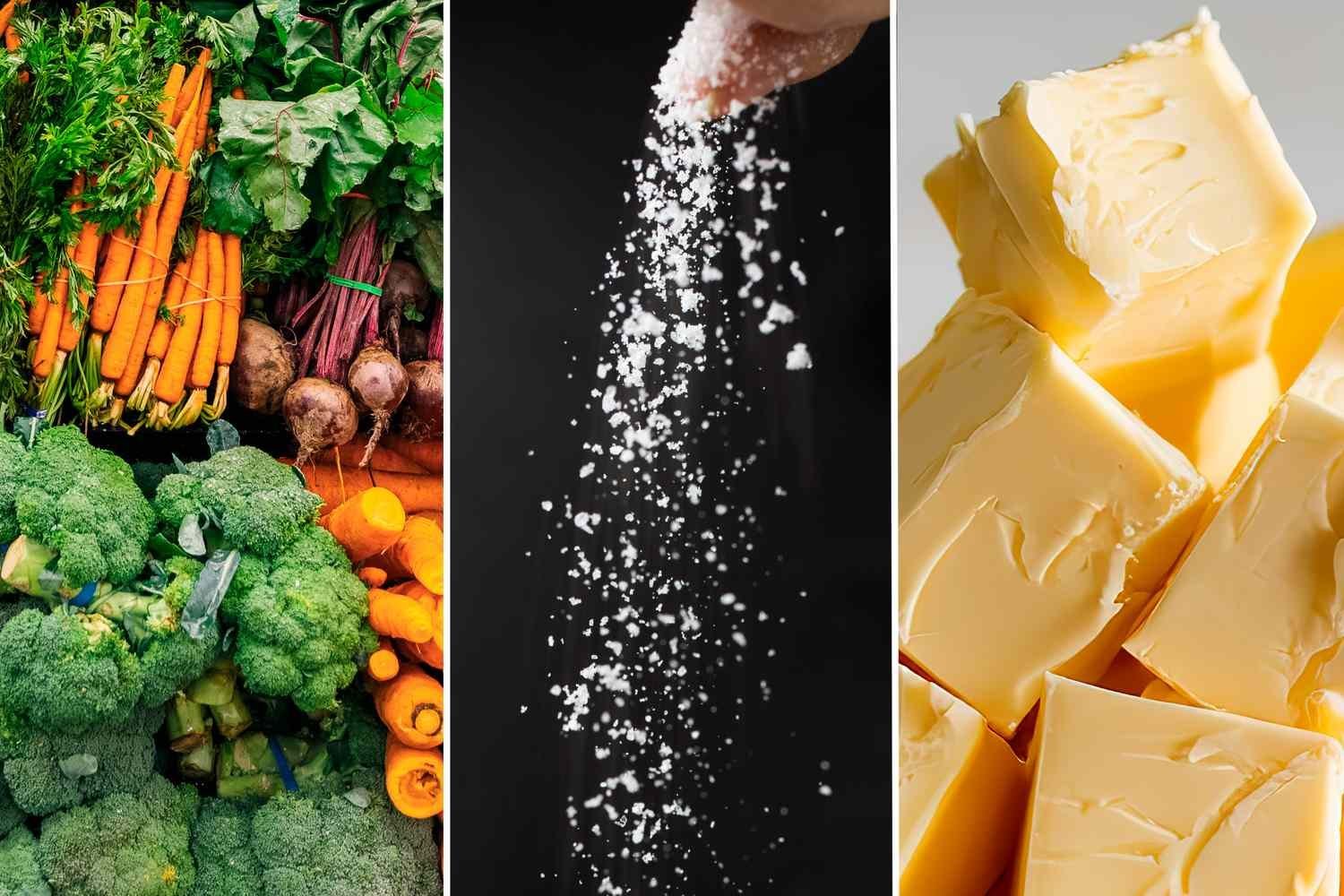
- The ability to share information about food online, particularly on social media, can also make it easy for dangerous food myths to become pervasive.
- We asked a food scientist which food myths she noticed this year were the most widespread and why each piece of misinformation is false.
- From labels on produce to misunderstood ingredients, these are three of the most common myths she shared with us.
The ability to share information online is a blessing and a curse. It helps keep us connected across long distances and can be a great source of new ideas, but it can also spread inaccurate assertions like wildfire.
In 2025, we debunked several myths that have become popular in contemporary food culture, ranging from the common social media claim that beef tallow can be used for skincare to the question of whether you can cook a steak in a dishwasher. When we didn’t have the answer, we turned to expert sources to find out what is (and isn’t) true.
to و a و food – تفاصيل مهمة
An important part of learning about food and cooking is being open tounlearning,too. (For example, I recently switched the way I store bread after than a decade of keeping it in my fridge, thanks to advice from famous baker Paul Hollywood.) To start 2026 on a informed foot, we asked food scientist and educator Abbey ThielPhD, what some of the most common food myths she encountered this year were — and why we shouldn’t buy into them.
Myth: Organic produce means that no pesticide or fungicide sprays were used
With labels that are actually regulated by the USDA or FDA and marketing terms that are far less meaningful than they sound, it can be difficult to keep track of the exact definition of every identifier you see at the grocery store. It’s easy to see why many consumers may believe that organic produce was cultivated without the use of any pesticide or fungicide sprays, but as Thiel points out, that’s not the case.
The food scientist explains that “This is a very common misunderstanding, and it is not accurate. Organic farming does allow the use of pesticides and fungicides. The difference is not whether sprays are used, but which ones are allowed and how they are regulated. Organic systems restrict farmers to a specific list of approved substances, many of which are derived from natural sources. Examples include copper-based fungicides, sulfur, neem oil, spinosad, and microbial products likeBacillus thuringiensis.”
are و the و of – تفاصيل مهمة
The use of substances like these in agriculture ultimately benefits us. They’re used to manage insects, fungi, and plant diseases that would otherwise destroy crops, and Thiel emphasizes that “Without some form of pest management, organic yields would be extremely low and food prices would be much higher.”
Myth: You shouldn’t eat anything you can’t pronounce
Amid growing concerns about the dangers of ultra-processed foods (UPFs), home cooks are paying closer attention to the ingredient lists on the foods and drinks they buy. This scrutiny is especially evident on social media: scroll through health-focused content, and you’re likely to encounter videos of people reading ingredient lists aloud, implying that unfamiliar or complicated-sounding words automatically signal a UPF.
This is an understandable assumption, but Thiel notes that “it is a terrible way to judge whether food is safe or healthy to eat. The ability to pronounce a word has nothing to do with whether a substance is dangerous or artificial. Usually, it comes down to whether the name comes from chemistry, biology, or marketing. Scientists name molecules precisely so we know exactly what they are. That precision often makes the words longer.
to و the و is – تفاصيل مهمة
“For example, 1,25-Dihydroxycholecalciferol is simply vitamin D in its biologically active form. The long name describes its chemical structure and its behavior in the body. Calling it ‘vitamin D’ is convenient. Calling it by its chemical name is accurate.”
Vitamin D is far from the only example of this. Thiel also explains that ascorbic acid is vitamin C, sodium chloride is table salt, and dihydrogen monoxide is water. According to the food scientist, “If we followed the ‘can’t pronounce it’ rule strictly, we would eliminate some of the most basic and essential components of our diet.”
Myth: Margarine is one molecule away from being plastic
While this isn’t a new myth, it’s one Thiel continues to see perpetuated online — and it’s a misconception you’ll often see crop up in social media comments. Over the decades, this falsehood has been sustained by forces including the dairy industry’s lobbying against margarine and, today, fears of UPFs.
the و is و of – تفاصيل مهمة
Thiel tells us that “this idea has circulated online for years because it sounds scientific and alarming, but it falls apart once you look at how molecules actually work. Saying margarine is ‘one molecule away from plastic’ is like saying water is one molecule away from hydrogen peroxide or that table salt is one element away from chlorine gas.
“Small chemical differences can completely change how a substance behaves. In chemistry, structure determines function. Our bodies clearly recognize that difference. We have enzymes that digest dietary fats, including margarine, and use them for energy and cellular function… No one is absorbing plastic when they eat margarine. Margarine is not plastic. It does not behave like plastic, and it is not chemically close to plastic in any meaningful scientific way. The phrase is catchy, but it misrepresents how chemistry and food science actually work.”
Both butter and margarine have their place in the food world, and while this myth may seek to demonize the latter, margarine is a valuable ingredient for many households. If you buy margarine because it’s affordable, you can’t consume dairy, it tastes better, or your doctor recommends it, then rest assured that you don’t need to worry about this fiction.
Disclaimer: This news article has been republished exactly as it appeared on its original source, without any modification.
We do not take any responsibility for its content, which remains solely the responsibility of the original publisher.
Disclaimer: This news article has been republished exactly as it appeared on its original source, without any modification.
We do not take any responsibility for its content, which remains solely the responsibility of the original publisher.
Author: uaetodaynews
Published on: 2025-12-30 15:22:00
Source: uaetodaynews.com


Find the latest breaking news and in-depth coverage on world affairs, business, culture, and more